
Hard water in Newark, DE accelerates water heater failure by dropping dissolved calcium and magnesium minerals out of suspension during heating. These minerals settle as heavy sediment at the bottom of the tank, creating an insulating layer that overheats the tank bottom, corrodes heating elements, clogs lines, and lowers heating efficiency by up to 30%.
Why Is Newark, DE Water So Hard on Water Heaters?
Newark, DE water contains elevated levels of dissolved calcium and magnesium drawn from regional groundwater aquifers and surface water sources across New Castle County. When this hard water is heated past 120°F inside a water heater, those minerals crystallize, settle, and form a dense, rock-like scale that damages internal components.
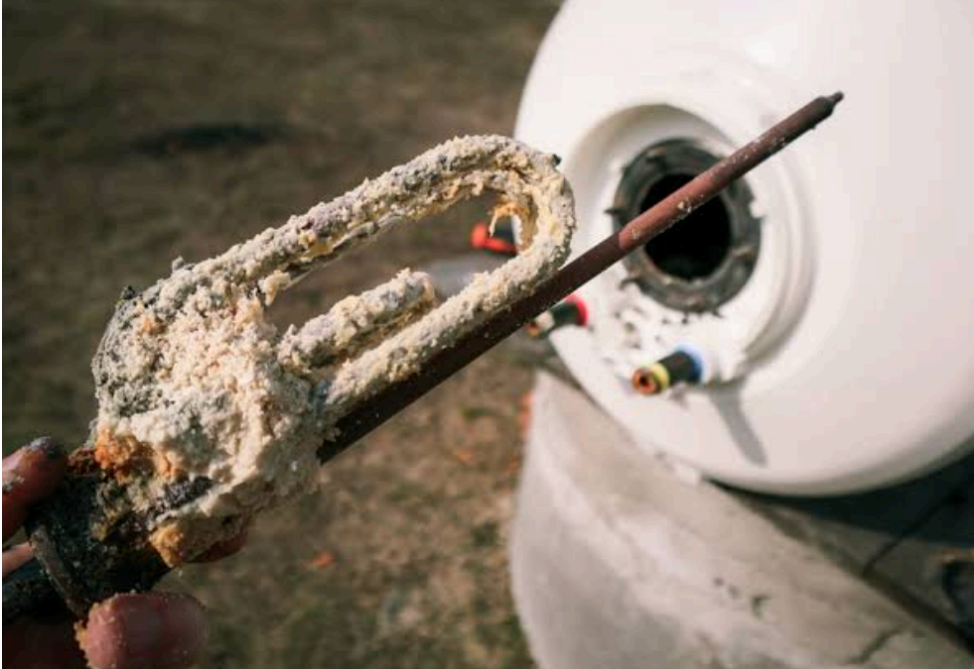
Whether your home is a historic property near the University of Delaware campus with an older cast-iron or galvanized plumbing infrastructure, or a newer single-family build off Route 896, hard water is an invisible threat.
While municipal treatment renders Newark’s water completely safe to drink, it does not remove the hard
minerals responsible for mineral scale. Over time, this mineral buildup restricts pipe volume, damages
valves, and forces your water heater to work twice as hard to reach target temperatures.
4 Ways Hard Water Destroys Your Newark Water Heater
1.Thermal Insulation and Tank Burnout
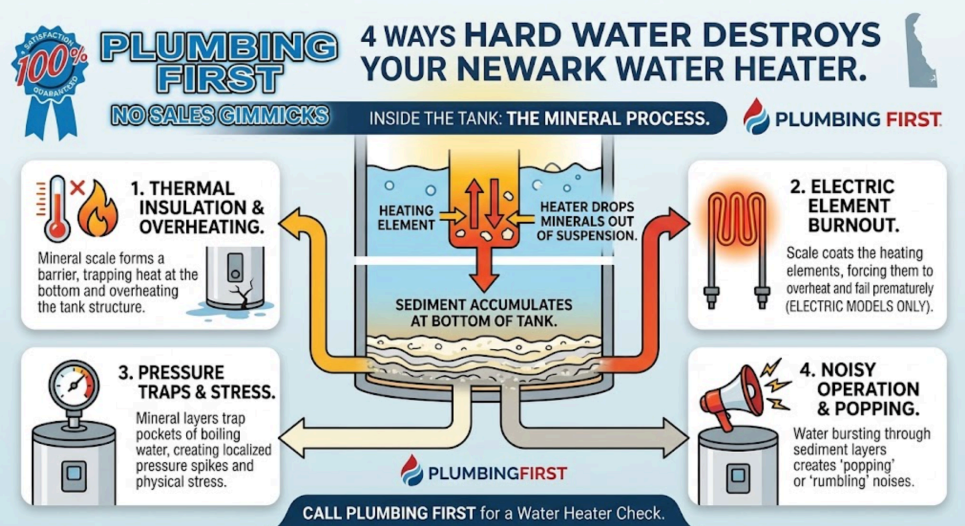
In gas water heaters, burner flames heat the bottom of the steel tank. When a 2- to 4-inch layer of mineral sediment covers the tank floor, it acts as a thermal insulator. The burner runs continuously because heat cannot efficiently pass through the sediment layer into the water. This extreme trapped heat weakens the steel tank, degrades the interior glass lining, and leads to premature tank fractures and costly leaks.
2.Heating Element Burnout in Electric Models
In electric water heaters, upper and lower heating elements sit directly inside the water. Calcium scale coats these elements in a thick crust. The lower element, buried under settling sediment, overheats quickly and burns out, leaving you with lukewarm or completely cold water.
3.Excessive Noise and Pressure Traps
If you hear popping, banging, or rumbling sounds coming from your utility closet, hard water sediment is the culprit. Water gets trapped underneath the hardened mineral crust at the bottom of the tank. As the burner fires, this trapped water reaches boiling point and bursts through the sediment layer, creating a loud popping sound. This constant micro-boiling creates unnecessary internal pressure spikes.
4.Valve Clogging and Restricted Flow
Sediment does not just stay in the tank. Loose mineral flakes travel into your home’s hot water lines, clogging aerators, damaging shower valves, and sticking inside the water heater’s drain valve. This makes standard maintenance flushing difficult or impossible without professional clearing tools.
Signs Your Newark Home Has Hard Water Sediment Buildup
- Rumbling or Crackling Noises: Banging sounds during a heating cycle signal heavy scale accumulation.
- Hot Water Runs Out Quickly: Sediment displacement reduces the total volume of water your tank can hold and heat.
- Rusty or Cloudy Hot Water: Mineral scale combined with interior tank degradation causes discolored water at the tap.
- Smelly Hot Water: Heavy sediment beds create an oxygen-deprived environment where harmless sulfur bacteria thrive, causing a rotten-egg smell.
- Spikes in Monthly Energy Bills: A scale-coated water heater requires significantly more natural gas or electricity to heat the same volume of water.
How to Fix Hard Water Damage in Newark Water Heaters
To fix hard water damage, perform an annual tank flush to remove loose sediment, replace degraded anode rods, and install a whole-home water softener to remove calcium and magnesium before water enters your plumbing system.
Step 1: Perform an Annual Water Heater Flush
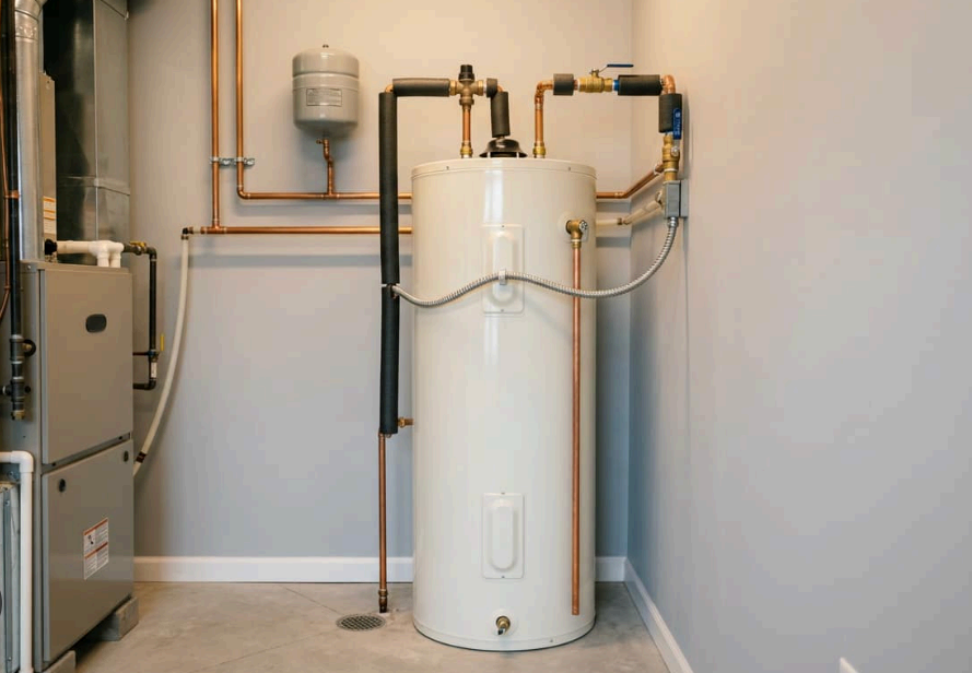
Flushing your tank removes loose sediment before it calcifies into a solid block.
- Turn off the gas valve or shut off the circuit breaker for electric units.
- Shut off the cold water inlet valve at the top of the heater.
- Attach a standard garden hose to the bottom drain valve and run the other end to a floor drain or driveway.
- Open a hot water faucet nearby to break the vacuum, then open the drain valve.
- Once empty, briefly turn the cold water valve back on in bursts to churn up and flush out remaining floor sediment.
Important Safety Note: If your water heater is over 6 years old and has never been flushed, consult a licensed plumber first. Opening an old, corroded drain valve on an unmaintained tank can break the seal and cause an immediate leak.
Step 2: Replace the Anode Rod
The sacrificial anode rod hangs inside your tank and attracts corrosive elements so your steel tank doesn’t rust. Hard water accelerates anode rod depletion. Inspect this rod every 2 years and replace it when more than 6 inches of core wire is exposed.
Step 3: Install a Whole-Home Water Softener
Flushing removes existing sediment, but it does not stop hard water from entering your home. Installing an ion-exchange water softener removes calcium and magnesium ions entirely, converting hard water into soft water. This single upgrade protects your water heater, dishwashers, washing machines, and fixture finishes throughout your entire Newark property.
Comparing Hard Water Solutions for Newark Homes
| Solution | Primary Function | Lifespan Extension | Protection Scope | Maintenance Needed |
|---|---|---|---|---|
| Annual Tank Flush | Removes loose, uncalcified sediment | Adds 2–4 Years | Water Heater Only | Performed Annually |
| Anode Rod Replacement | Prevents internal tank rust/corrosion | Adds 3–5 Years | Water Heater Only | Inspected Every 2 Years |
| Water Softener Installation | Eliminates calcium/magnesium ions | Maximizes System Life | Whole-Home Plumbing | Salt Refills (3–4x/Year) |
| Tankless Conversion | Eliminates standing water storage | 20+ Year Unit Life | Water Heater Only | Annual Scale Descaling |
Frequently Asked Questions
How hard is the water in Newark, Delaware?
Newark water typically ranges from moderately hard to hard (between 7 to 12 grains per gallon, depending on whether your supply comes from municipal surface water or deep wells). This concentration is high enough to cause noticeable scale buildup on fixtures and inside heating appliances within 12 to 18 months of operation.
Should I repair or replace my hard-water damaged water heater?
If your unit is under 8 years old, heating elements can be replaced, and the tank can be descaled. However, if the tank is over 10 years old, actively leaking from the base, or making severe rumbling noises, replacement is the safest, most cost-effective option. Modern high-efficiency systems lower monthly utility costs immediately.
Will a tankless water heater solve my hard water problems in Newark?
Tankless water heaters eliminate standing water storage, which prevents bottom-tank sediment beds. However, heating elements inside tankless units can still scale up rapidly in Newark. If you install a tankless system, pairing it with a water softener or an inline anti-scale filter is essential to maintain manufacturer warranty coverage.
Need Your Water Heater Checked in Newark, DE?
At Plumbing First, we don’t send salesmen in uniform, we send experienced, licensed plumbers who diagnose your issue honestly. If hard water is causing noisy pipes, lukewarm showers, or high utility bills in your Newark home, we’re here to help with straight answers and straightforward pricing.
Contact Plumbing First today to schedule a water heater flush, system evaluation, or water softener installation.