
Tree roots intrude into Newark, DE sewer lines by seeking out moisture, oxygen, and nutrients escaping from small gaps or cracks in aging underground pipes. Once inside, root systems expand rapidly, catching toilet paper and debris, slowing drainage, and eventually causing complete sewer line backups into residential basements.
Why Newark, DE Clay Sewer Lines Are Vulnerable to Root Intrusion
Tree root intrusion is most prevalent in established Newark neighborhoods like College Park, Fairfield, and West Park, where homes built between the 1950s and 1970s rely on original terra cotta (clay) or cast iron sewer laterals. These older clay pipe segments were joined using asphalt or mortar seals that degrade over time, creating micro-gaps.
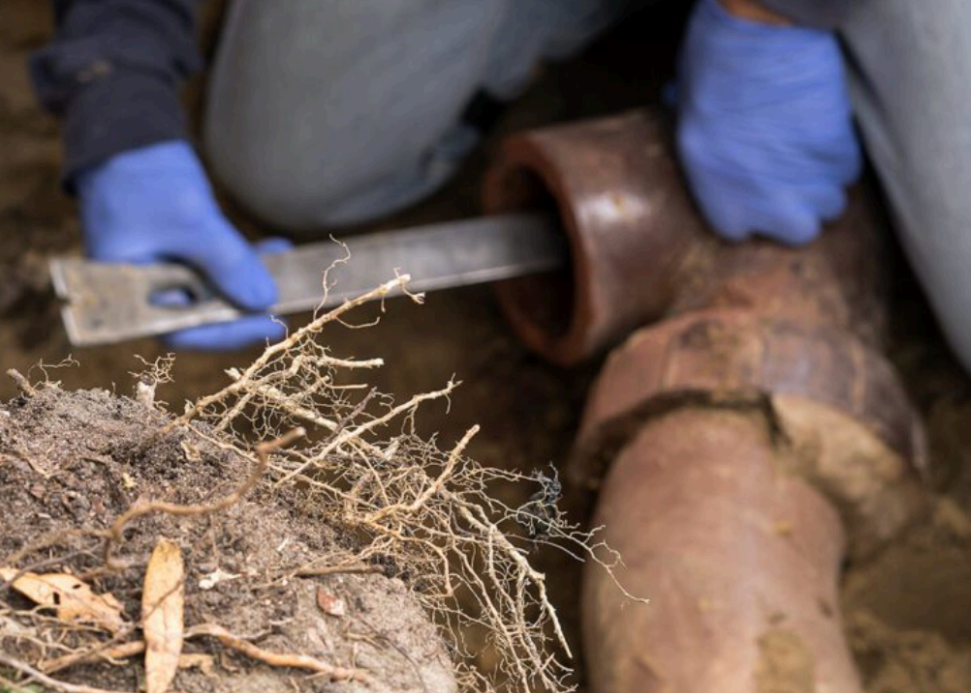
Mature oak, maple, and sycamore trees common across New Castle County extend extensive root structures looking for water sources. During wet spring months, elevated groundwater pressure forces nutrient-rich moisture through weak pipe joints. Nearby tree roots detect this moisture gradient and grow directly toward the pipe, entering through microscopic seams and multiplying inside the warm, nutrient-filled pipe interior.
Early Warning Signs of Sewer Line Root Intrusion
- Frequent or Recurring Drain Clogs: Multiple fixtures (toilets, tubs, sinks) backing up simultaneously signal a main line restriction rather than a single branch clog.
- Gurgling Toilet Bowls: Air trapped behind a root mass bubbles back up through standing toilet water when water drains elsewhere in the home.
- Sewer Gas Odors Near Drains: Hairline root gaps allow sewer gases to escape into yards or basements before full wastewater backups occur.
- Sinks and Tubs Draining Slowly: Wastewater draining sluggishly despite standard drain cleaning attempts indicates a deep main lateral obstruction.
- Unusually Lush Patches of Lawn: Wastewater leakage fertilizes the soil above the sewer line, creating patches of dark, rapidly growing grass over your yard.
How HD Camera Inspections Catch Roots Before Sewage Backs Up
A sewer camera inspection identifies tree root intrusion early by inserting a high-definition, self-leveling fiber-optic camera directly into your home’s main sewer cleanout. The real-time video feed pinpoints exactroot entry locations, pipe offset severity, and structural damage without digging up your lawn.
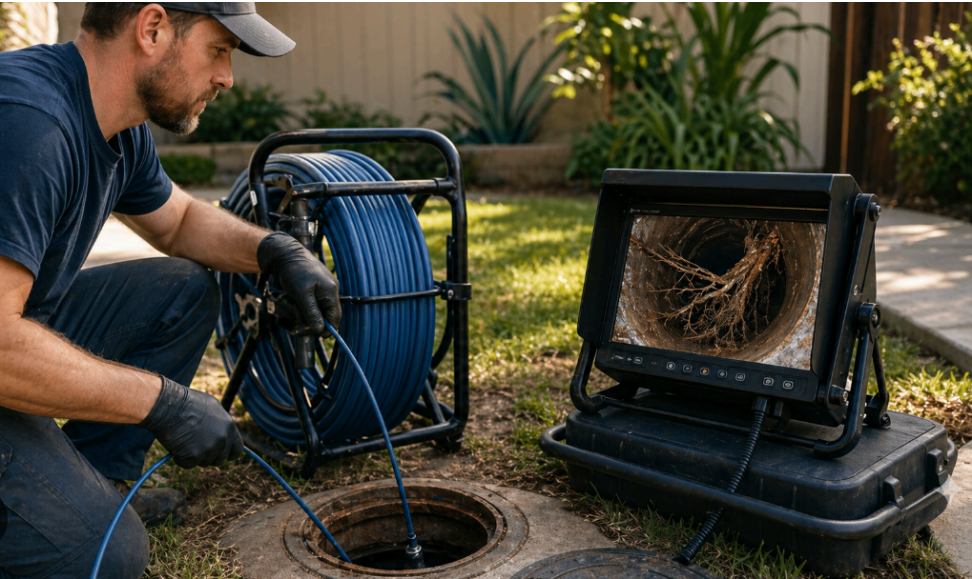
By deploying a localized transmitter inside the camera head, plumbers track the precise depth and position of the obstruction above ground. This eliminates diagnostic guessing, letting homeowners visually inspect the internal condition of their terra cotta or cast iron pipes before deciding on a repair path.
Professional Solutions: Clearing vs. Permanent Repair
Clearing a root stoppage provides immediate relief, but permanent repair prevents roots from growing back through compromised pipe joints.
1.High-Pressure Hydro Jetting
Hydro jetting utilizes high-pressure water streams (up to 4,000 PSI) delivered through specialized forwardand rear-facing steel nozzles. This process shears tree root masses flush against the interior pipe wall, scouring away accumulated grease, scale, and sediment without cracking surrounding clay walls.
2.Professional Snaking (Mechanical Root Cutting)
Mechanical drain snakes feature rotating blade attachments sized to match your pipe diameter. While effective at cutting an opening through an active clog to restore flow, snaking leaves root tips intact behind the joint, allowing roots to return within 6 to 12 months.
3.Trenchless CIPP (Cured-In-Place Pipe) Lining
For cracked or root-invaded clay pipes that remain structurally sound, trenchless pipe lining creates a seamless epoxy liner inside the existing pipe. This eliminates all pipe joints, sealing out future root entry for decades without destroying driveways or landscaping.
Comparing Sewer Root Removal Methods
| Treatment Method | Primary Function | Root Elimination Level | Expected Duration | Impact on Underground Joints |
|---|---|---|---|---|
| Mechanical Snaking | Punches hole through active stoppages | Temporary (Cuts center mass) | 6–12 Months | Leaves joints exposed to re-entry |
| Hydro Jetting | Scours 100% of internal pipe scale/roots | Extended (Flushes pipe walls clean) | 1–3 Years | Clears joints; requires chemical foaming sealant |
| Chemical Root Foaming | Dehydrates and kills surviving root tips | Preventative Maintenance | Apply Annually | Stops root regrowth without damaging tree |
| Trenchless Pipe Lining | Creates a jointless epoxy internal pipe | Permanent Solution | 50+ Years | Completely seals all seams and gaps |
Frequently Asked Questions
Will chemical root killers clear a total sewer line backup in Newark?
No, chemical root treatments cannot clear a complete sewer line block. Foaming root killers require active water flow to coat the top and sides of the pipe interior where root systems hang. Complete blockages must first be cleared mechanically or via hydro jetting before applying root inhibitors.
Can tree roots destroy a clay sewer pipe permanently?
Yes, as tree roots grow thicker inside a clay sewer pipe, they exert outward pressure against the brittle terra cotta walls. Over time, this expanding root mass cracks the pipe collar, shifts pipe alignment (creating offsets), and eventually collapses the sewer line entirely.
Does homeowner’s insurance cover root intrusion repair in Delaware?
Standard Delaware homeowner’s insurance policies typically exclude gradual wear-and-tear and root damage to underground service lines. However, many local utility providers and insurers offer optional water and sewer line protection riders that assist with lateral replacement costs.
Slow Drains or Gurgling Toilets in Newark?
At Plumbing First, we don’t send salesmen with aggressive pitchbooks, we send real, experienced plumbers who get straight to the root of your problem. If your Newark home is experiencing sluggish drains or recurring main line clogs, we can perform an HD camera inspection and show you exactly what’s going on underground.
Contact Plumbing First today for clear answers, transparent flat-rate pricing, and expert rooter services
across New Castle County